
Last updated November 15, 2026
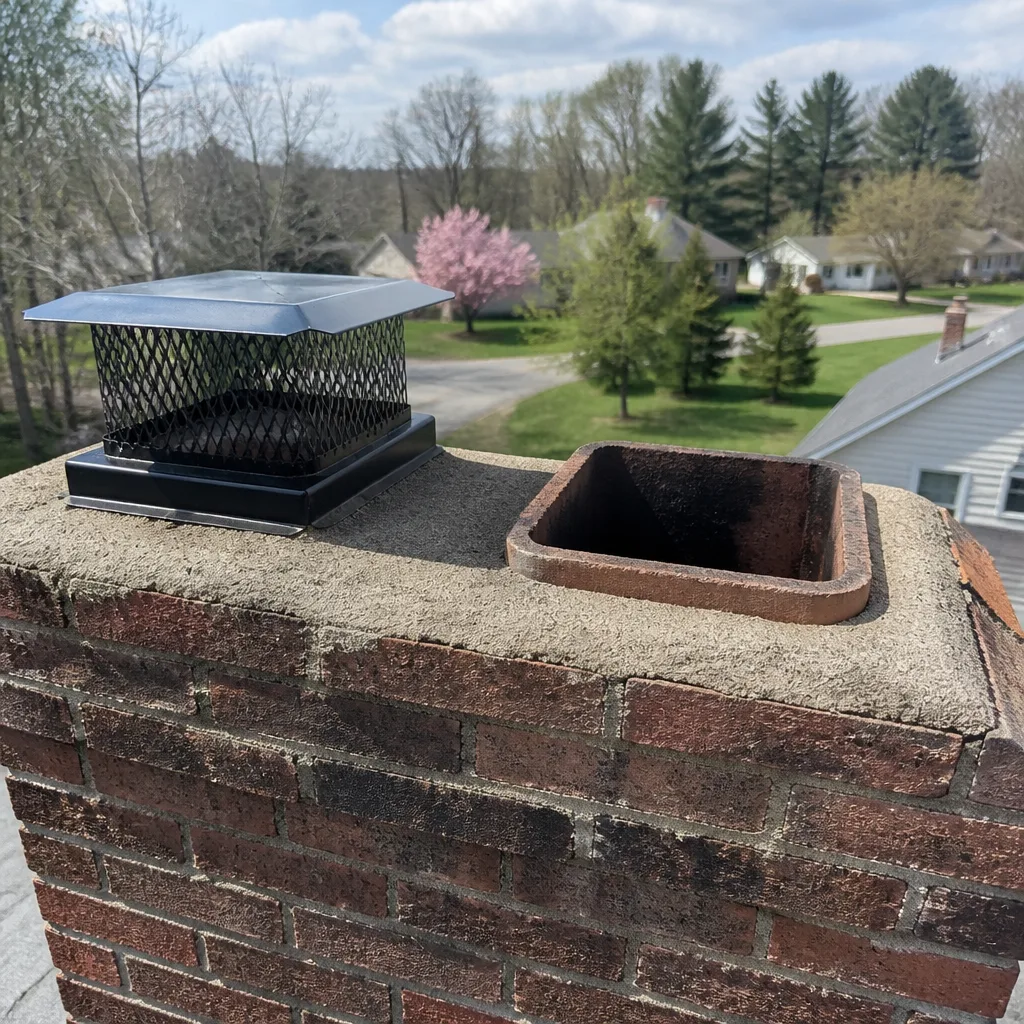 Sweep & inspection
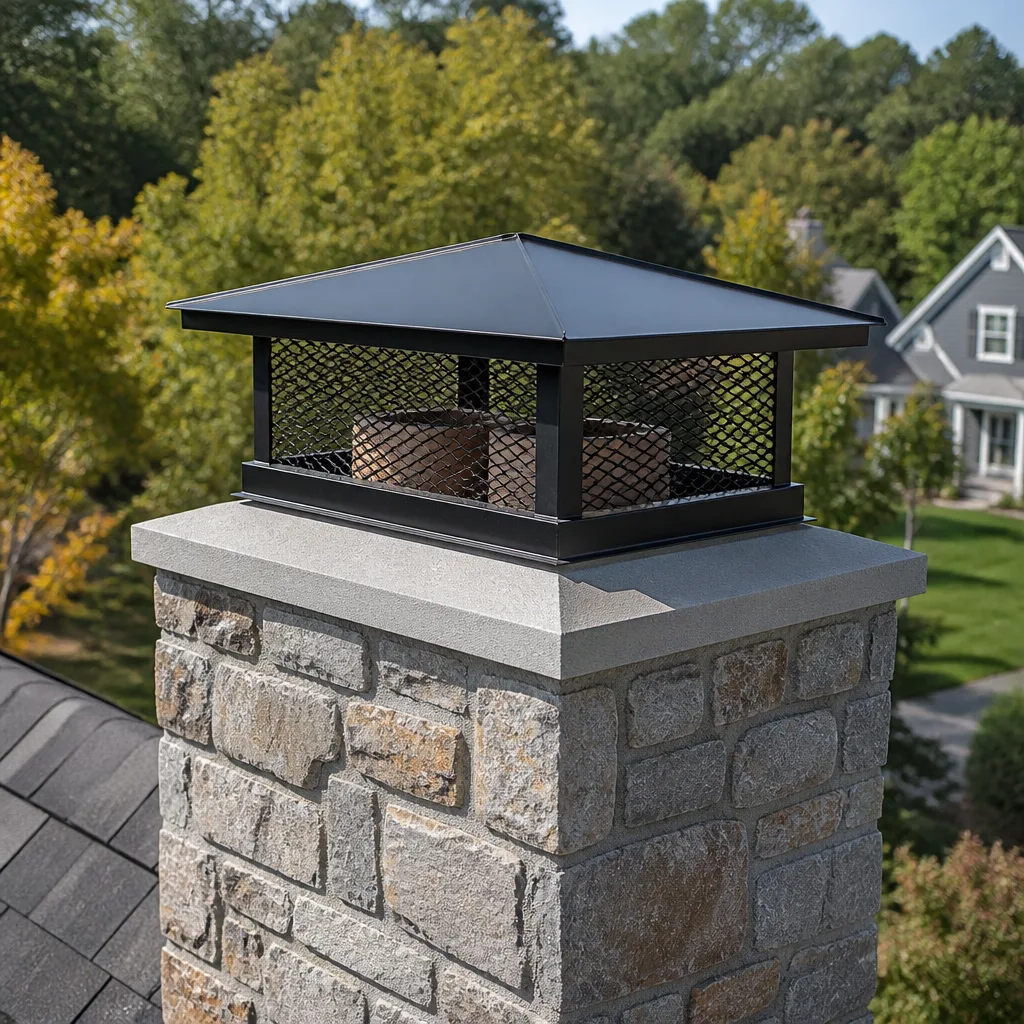 Caps & crowns
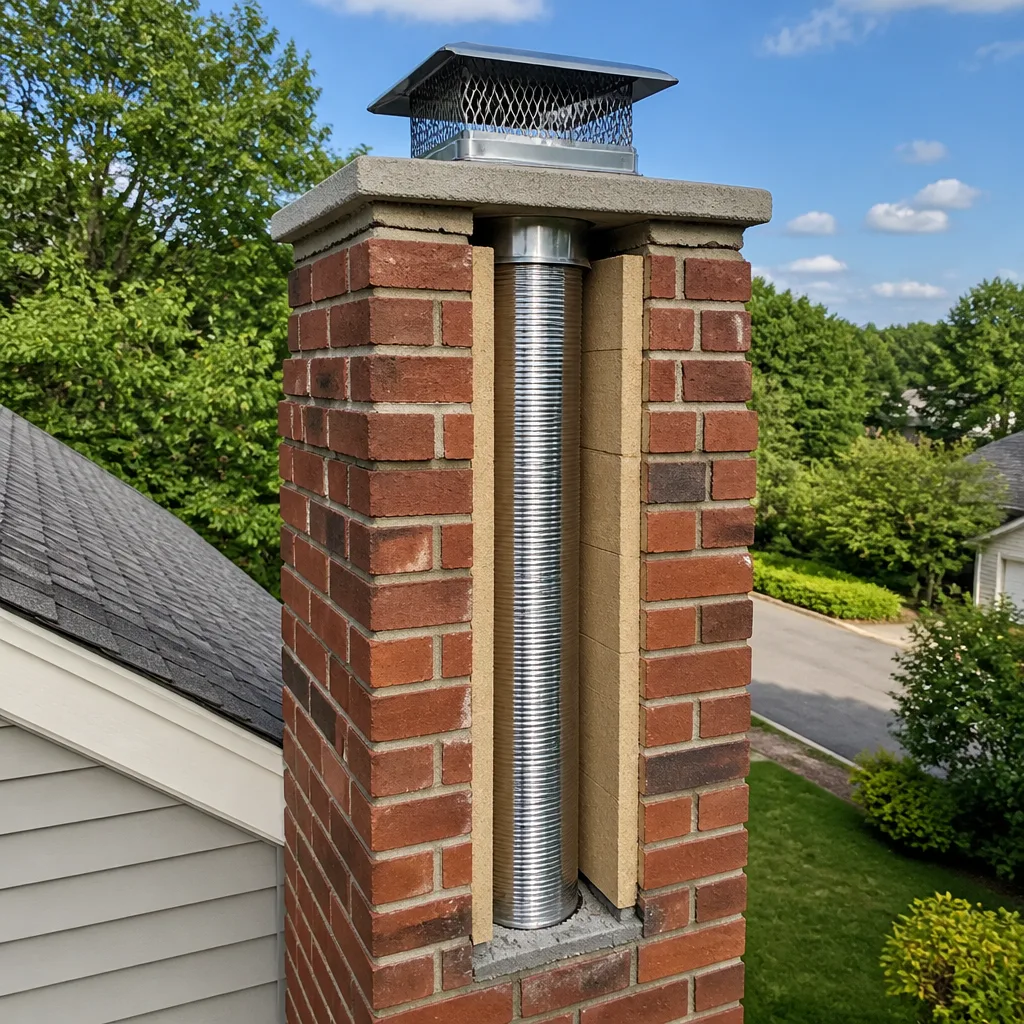 Flue relining
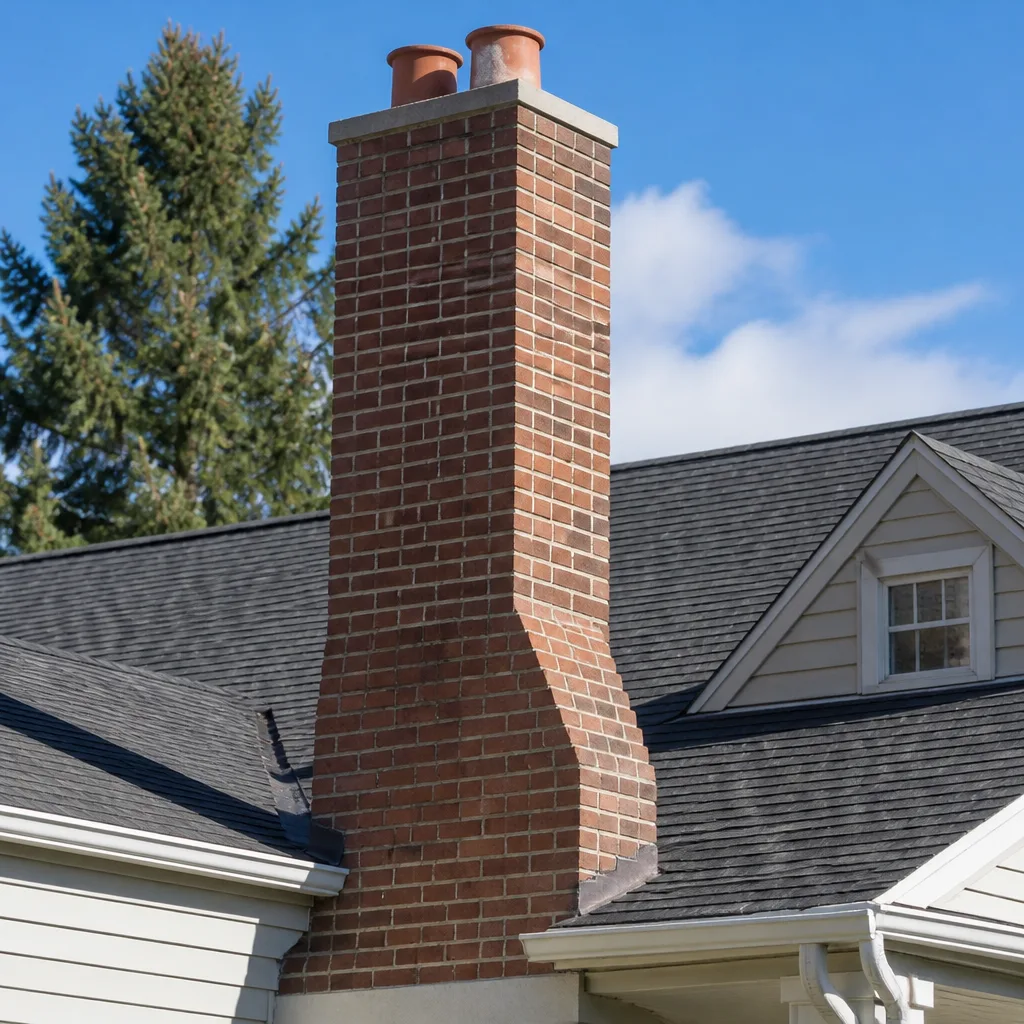 Masonry repair
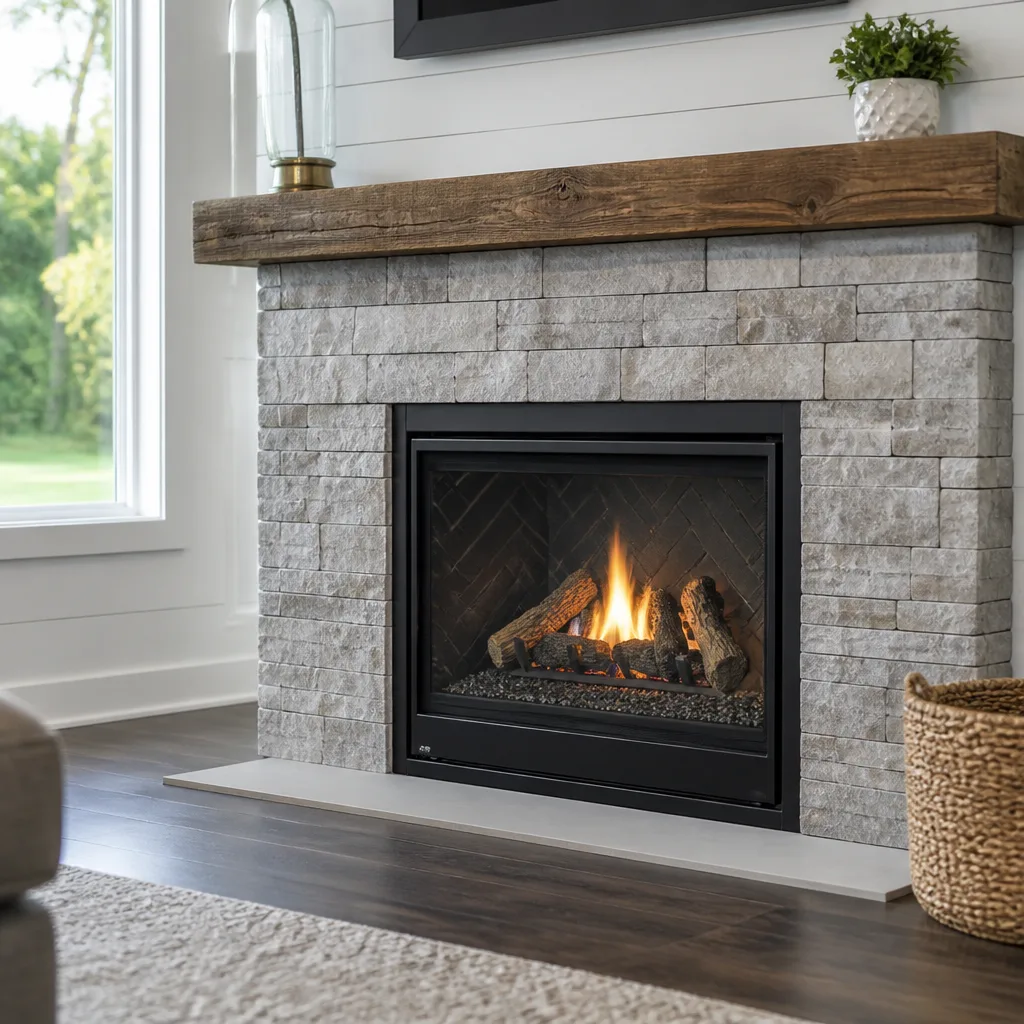 Gas fireplace service
Level 1 sweep and inspection to the NFPA 211 annual standard - flue, crown, cap, and flashing checked and photographed
Chimney sweep logs do not sweep chimneys. They loosen some creosote - which then falls where a brush and vacuum still have to collect it.
Chimney Cleaning Warning Signs: A Tyler Homeowner’s Reference Guide
Most chimney problems don’t start with flames. They start with a smell in July, a stain that looks like a water spot, or smoke that “just puffs back a little” when you light the first fire of the season. Homeowners in Tyler tend to read those moments as quirks of an old house. In our experience, each one maps to a specific mechanical cause with a specific fix, and treating them all the same way is how people spend money and still end up with the real problem. This guide shows you what to look for, what each sign means, and when to stop using the fireplace altogether.
Quick Answer
The most reliable chimney cleaning warning signs are a persistent campfire smell in warm weather, dark staining on the firebox or exterior brick, smoke that rolls back into the room instead of rising, and a hollow or gritty sound when you run a hand along the flue parts you can reach. These point to creosote buildup, a damaged flue liner, a blocked or undersized flue, or failing exterior components, and each one needs a different repair. Any sign of cracked masonry inside the firebox, loose liner pieces, or a strong chemical smell after a fire means stop using the fireplace until a professional inspects it.
Styles & brands we work with
- Sweep & inspection
- Caps & crowns
- Flue relining
- Masonry repair
- Gas fireplace service
Table of Contents
- The Symptom-to-Cause Matrix
- Why Odor Is Your Earliest Warning Sign in East Texas
- Smoke That Doesn’t Rise: Four Mechanical Failures
- Exterior Warning Signs You Can See From the Ground
- When to Shut the Fireplace Down Immediately
- How to Document What You’re Seeing Before You Call
- How Often a Tyler Chimney Needs Sweeping
- What a Proper Inspection Actually Checks
The Symptom-to-Cause Matrix
Warning signs are evidence, and evidence is only useful if you know what it’s evidence of. A homeowner who calls and says “my chimney is acting up” gives a technician less to work with than one who says “there’s a brown stain on the ceiling next to the chimney and the smell got worse after rain.” Our inspection work is informed by hands-on repair experience, so we read signs the same way a technician would read them with a flashlight and a camera, and we’ll tell you what we found and what it means.
Use this mapping to organize what you’re seeing. It isn’t a diagnosis, but it will get you to the right conversation faster.
- Campfire or smoky smell in summer: creosote in the flue drawing moisture from humid air, or a flue that’s been open to the house instead of sealed.
- Dark brown or black staining on firebox brick, near the damper, or at the top of the firebox opening: combustion gases escaping past a compromised liner or a gap in the masonry.
- White chalky staining on exterior brick: water migrating through the chimney and pulling salts out of the masonry as it dries.
- Smoke rolling back into the room when you light up: a blocked flue, an undersized flue, a stack effect problem, or negative pressure in the house itself.
- Gritty, hollow scraping sound: flaking liner material or loosened mortar inside the flue.
- Rust or dark discoloration on the damper and firebox hardware: sustained moisture in the flue system.
- Soot streaks above the firebox opening: the smoke path is broken at the throat, often at a damaged damper frame.
Each line has one right answer to it, and none of them are fixed by sweeping alone. Sweeping removes the creosote; it doesn’t restore a liner or stop water. That’s the reason our company handles chimney repair alongside the sweep: what we find in a cleaning is usually something we can diagnose then and there rather than describing to you in vague terms and sending you elsewhere.
Why Odor Is Your Earliest Warning Sign in East Texas
A campfire smell in the middle of a Tyler summer is not a normal fireplace smell. It’s the creosote in your flue reacting to humid air, and it’s the single most reliable early warning sign in this climate.
Here’s the mechanism. Creosote is a residue of incomplete combustion, and it’s hygroscopic, meaning it pulls moisture out of the air. Through East Texas summers, humidity runs high for weeks at a time, and the chimney is generally the coolest, dampest path out of the house. That moisture combines with creosote and the smell travels down into the living space. The stronger it gets, the more creosote is sitting in the flue. Some of it may be powdery, some may be the hard glazed variety that forms when a fire runs cool and starved of air.
The reason odor is a better early warning than smoke is timing. Smoke only shows itself when you burn, which means you find out about a problem at the worst moment. Odor shows itself in months when you’re not burning at all, giving you the whole warm season to schedule a sweep before you want the fireplace back. Treating the smell as “just that old chimney smell” is the most common way East Texas homeowners let creosote build for another full season.
Odor from a chimney that has been closed up and unused can also point at a missing or damaged cap, a firebox that hasn’t been sealed, or debris that has fallen into the flue. When we arrive for a chimney sweep and the complaint is smell, we check the flue condition, the cap, and the firebox seals before we assume the answer is creosote alone. Caps, dampers, and venting come from purpose-built hardware lines like Famco and Copperfield, because an improvised cover on a flue is usually how a smell like this starts.
Smoke That Doesn’t Rise: Four Mechanical Failures
Smoke that “just puffs back a little” is not a draft problem you live with. It’s an indication of one of four specific mechanical failures, and each one has a different fix.
- A blocked flue. A nest, a collapsed liner section, or accumulated debris narrows the flue to the point where smoke can’t climb. The fix is a sweep and a look at what caused the blockage; if the liner failed, a sweep alone won’t solve it.
- An undersized flue for the appliance. A flue that’s too wide or too narrow for what you’re burning can’t establish a clean draft. This shows up when a fireplace was retrofitted or an insert was added without matching the flue. Sometimes a flexible liner sized to the appliance, like the DuraFlex systems we install for matches and replacements, is the right correction.
- Negative pressure in the house. A tightly sealed house, a running kitchen exhaust, or a dryer venting nearby can pull air down the chimney. This is not the chimney’s fault, but the chimney is where it shows up, and a technician needs to see it happen to call it.
- A stack effect problem. The chimney is too short, too cold, or has a geometry that doesn’t warm up enough to push smoke upward. This often shows up first on the first fire of the season when the flue is cold.
Treating all four as “a draft issue” and buying a draft fix wastes money. That’s the reason we inspect rather than guess: what we found tells us which of those four is actually in play. If your fire has been rolling smoke for a while, the creosote on the flue walls is also building up, so the sweep is usually worth doing whatever the cause turns out to be.
Exterior Warning Signs You Can See From the Ground
Walk outside and look up at the chimney before you walk back inside. Several of the most consequential warning signs are visible from the ground, and homeowners routinely read them as cosmetic issues that can wait.
- A missing or loose cap. A chimney cap is the roof of the flue. If it’s gone or hanging, rain, animals, and debris have a clear path into the flue. It reads as a small hardware issue and ends up being a water problem and a nesting problem.
- Cracked or spalling crown. The crown is the sloped concrete cap at the top of the chimney. When it cracks, water gets into the brick below it and the damage moves down a course at a time.
- Rust streaks on the flashing. Flashing is the metal where the chimney meets the roof. Stain lines point to a gap where water is getting in, and the interior damage usually shows up seam-first, far from the chimney.
- Discolored brick or white efflorescence. Efflorescence is a chalky crust that appears when moisture moves through brick and evaporates at the surface. It looks like a tint and behaves like a leak.
- Dropped mortar joints or crack lines running course-to-course. Loose mortar at the top of a chimney stack lets water in and lets the stack move. It isn’t cosmetic.
- A leaning or separated chimney stack. A chimney that has pulled away from the roofline or is visibly out of plumb is a structural concern and needs a professional look before anything else.
The correct fix for each of these is a purpose-built component, which is why we source caps, flashing, and venting from trade lines like Gelco and Olympia Chimney instead of fitting a generic cover and hoping it seals. When the crown, flashing, and cap are all matched to the chimney, the reason a chimney starts leaking usually stays solved.
When to Shut the Fireplace Down Immediately
Some warning signs mean stop, and some mean schedule. Getting that line right matters more than any other judgment call in this guide, because continuing to burn on a compromised flue is how a small repair becomes a serious safety situation.
Stop using the fireplace now if you notice any of these:
- You can see cracked or crumbling masonry inside the firebox, or pieces of liner material resting in the firebox.
- Smoke starts rolling into the room in volume and doesn’t stop once the fire is drawing.
- There are soot streaks or dark stains at the top of the firebox opening, which suggest gases are escaping past the liner into the house.
- You notice a strong chemical or acrid smell during or after a fire that doesn’t clear.
- You see a visible crack in an exterior clay flue tile at the top of the stack.
You can usually keep using the fireplace pending a scheduled repair if the signs are on the exterior (a cracked crown, loose flashing, a loose cap) or if the smoke issue is light and intermittent without any staining. Odor in the summer is not itself a shut-down signal, though it is a reason to schedule. A carbon monoxide alarm should be a stop signal regardless of everything else on this list. Don’t keep burning on a compromised flue while you wait, because a cracked liner or failed clay tile is a direct route for gases to enter the home instead of exiting above the roofline. If you’re not sure which side of the line you’re on, a diagnostic is cheaper than a guess.
How to Document What You’re Seeing Before You Call
Warning signs get misdescribed all the time, not from dishonesty but from change. A stain dries, a smell comes and goes, and a puff of smoke doesn’t repeat for the technician ten minutes after you called. Accurate documentation before the call is how you get an accurate diagnosis. Photographs and notes are the difference between “my chimney smells” and a real diagnostic starting point.
Follow this sequence:
- Photograph the firebox and the area around the opening with a bright light, straight on, before you do anything else. Stains and streaks are easier to read in light than in shadow.
- Take a photo of the damper and the throat with a phone flash, if it’s reachable, so a technician can see rust, soot lines, and hardware condition.
- Note the smell and the temperature outdoors when you notice it. “Smells after two humid days in July” is useful; “smells sometimes” is not.
- For smoke behavior, write down the conditions. Was the flue cold? Was the kitchen exhaust on? Was a bathroom fan running? Note all of them, then light a small test fire and watch where the smoke first breaks direction.
- From the ground, photograph the full chimney from four sides, plus a close shot of the crown, cap, flashing, and stack. Include sun direction so stains read clearly.
- Keep a simple log of dates and observations. It’s a diagnostic tool, not busywork.
When you call, describe the pattern, not just the sign. If you can’t photograph it, write it down. Call (866) 389-3453. We answer 24/7. Fast dispatch from 7am to 7pm, Sunday through Friday. We’re closed Saturday.
How Often a Tyler Chimney Needs Sweeping
Annual sweeping is the working standard for a chimney that sees regular use, with a cleaning sooner if you burn heavy for a season or if the flue has been closed up for a while. In East Texas, the case for that schedule is less about cold-weather hours and more about what creosote does in the warm months.
Creosote doesn’t just sit there. Warm, humid air pulls it into a reactive state, the smell becomes noticeable, and hard glazed deposits are harder to sweep once they cure. A chimney that’s drafted well and burned with dry, seasoned wood for a normal season usually needs the annual sweep. A chimney that’s had smoldering fires, damp wood, or a history of smoke rollback can build deposits faster and shouldn’t wait for the anniversary.
Three situations in Tyler tend to move the appointment forward:
- A stove or insert that burns continuously through cool spells. More hours of use, more creosote.
- A flue that’s been capped or closed for a season. Moisture accumulates and the smell becomes a reliable early signal.
- Any prior year where the sweep found glazed deposits. Those tend to return, and catching them early is the whole point.
Sweeping is a measurable thing, and a good sweep ends with a stated result: what was removed, what the flue looked like, and whether anything needs attention. If you’re scheduling your first cleaning for a fireplace in Tyler, ask what the sweep includes. If it’s just “we clean the flue,” you’re not getting the diagnostic half of the job.
What a Proper Inspection Actually Checks
A proper inspection checks the full system, not just the inside of the flue. The exterior components, the firebox, the liner, and the appliance connection all fail in different ways, and one without the others is an incomplete picture. The reason we run inspection and repair from the same team is that the failure modes are easier to read when you’ve repaired them.
Here’s what a thorough inspection covers in a Tyler home:
- The firebox and damper assembly. Cracks in the masonry, soot streaks at the throat, warped or rusted dampers, and gaps in the smoke shelf.
- The flue interior. Creosote levels, flue geometry, visible liner condition, and evidence of a failed clay tile, viewed with a camera rather than a flashlight from the firebox.
- The appliance connection. For a wood stove or insert, whether the connector is properly fitted and whether the flue is sized for the appliance.
- The exterior: crown, cap, flashing, and stack. All four are part of the system. A cap that doesn’t fit flashes or drafts is a symptom waiting to become a leak.
- Water entry patterns. Efflorescence and interior stains are read together to show where the water is actually getting in.
- The drafting performance under real conditions. A technician who watches a fire pull can name the cause of smoke rollback. A checklist alone can’t.
Where a liner has failed but the structure is otherwise sound, resurfacing with a HeatShield system is often the right call before full replacement. It’s a non-invasive repair that most single-trade cleaners don’t offer, and it requires the same technician who inspected the flue to be able to do the work. If the failure is more extensive, a full reline with a DuraFlex system is usually the alternative, matched to the appliance. The right materials for the job is a difference you can check against the written estimate.
Common Mistakes to Avoid
- Treating smoke rollback as a draft problem. Smoke that rolls into the room is evidence pointing at one of four mechanical failures. Calling it a draft and moving on leaves the actual cause in place, and the next fire tells the same story.
- Spotting exterior damage and calling it cosmetic. A cracked crown, a missing cap, or a single loose flashing point is the top of a water path. In East Texas humidity, that water has a whole warm season to move through the brick before you see the interior stain.
- Assuming the summer smell is “just the chimney.” That smell is your best early signal in this climate. When it shows up, the useful response is a sweep, not a window fan.
- Not photographing the sign before it changes. A stain dries. A smell disappears. A photo taken before the conditions change is a diagnostic fact; a remembered description is not.
- Burning on a suspect flue while you “see how it goes.” Cracks in firebox masonry, loose liner pieces, and soot streaks at the firebox throat are stop signs. If the flue is compromised, gases can enter the house instead of exhausting above the roof.
- Hiring a sweep who cleans but can’t inspect or repair. A sweep that ends with “you’ll want someone to look at that” is a handoff, not a service. Ask who inspects and who does the repair, and whether it’s the same team.
- Fitting generic hardware to a chimney repair. Caps and flashing made for a chimney fit, seal, and draft properly. Generic covers are where exterior repairs come undone.
See the difference
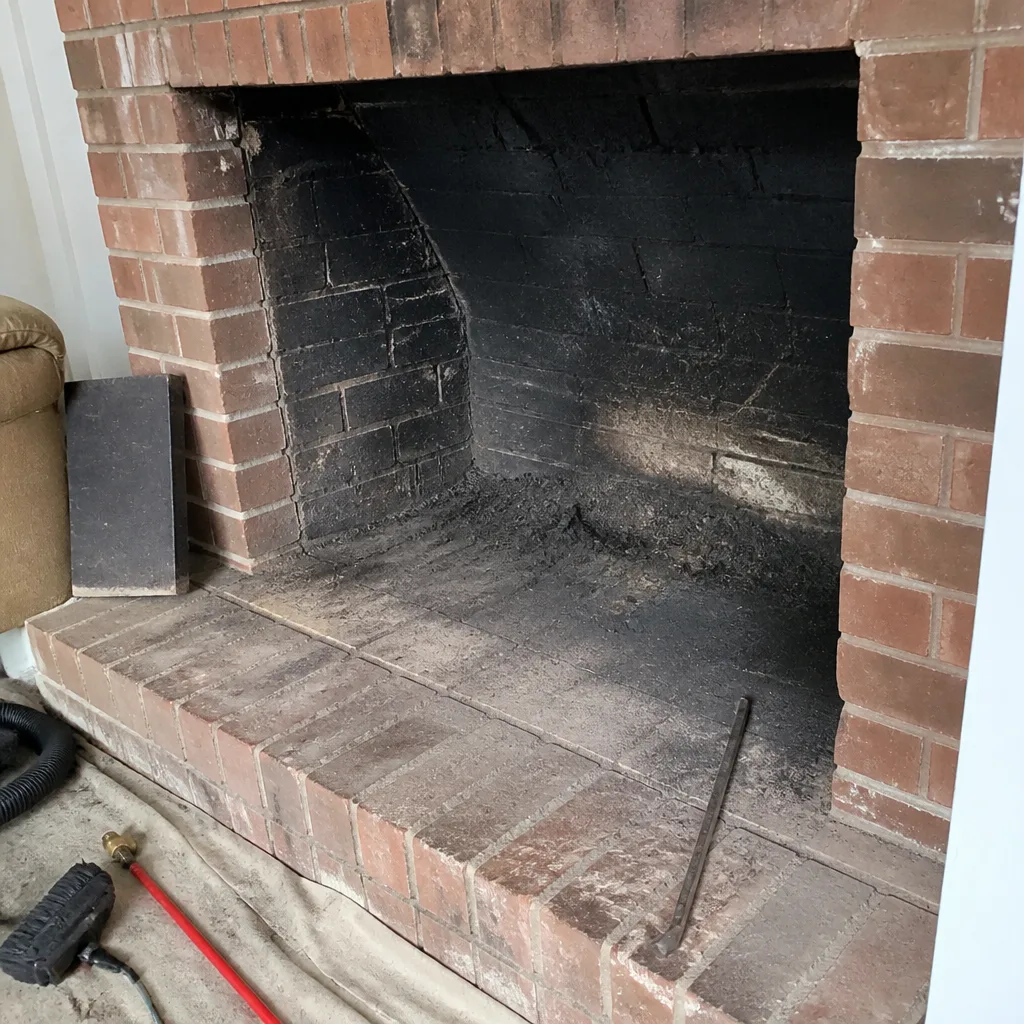 Before
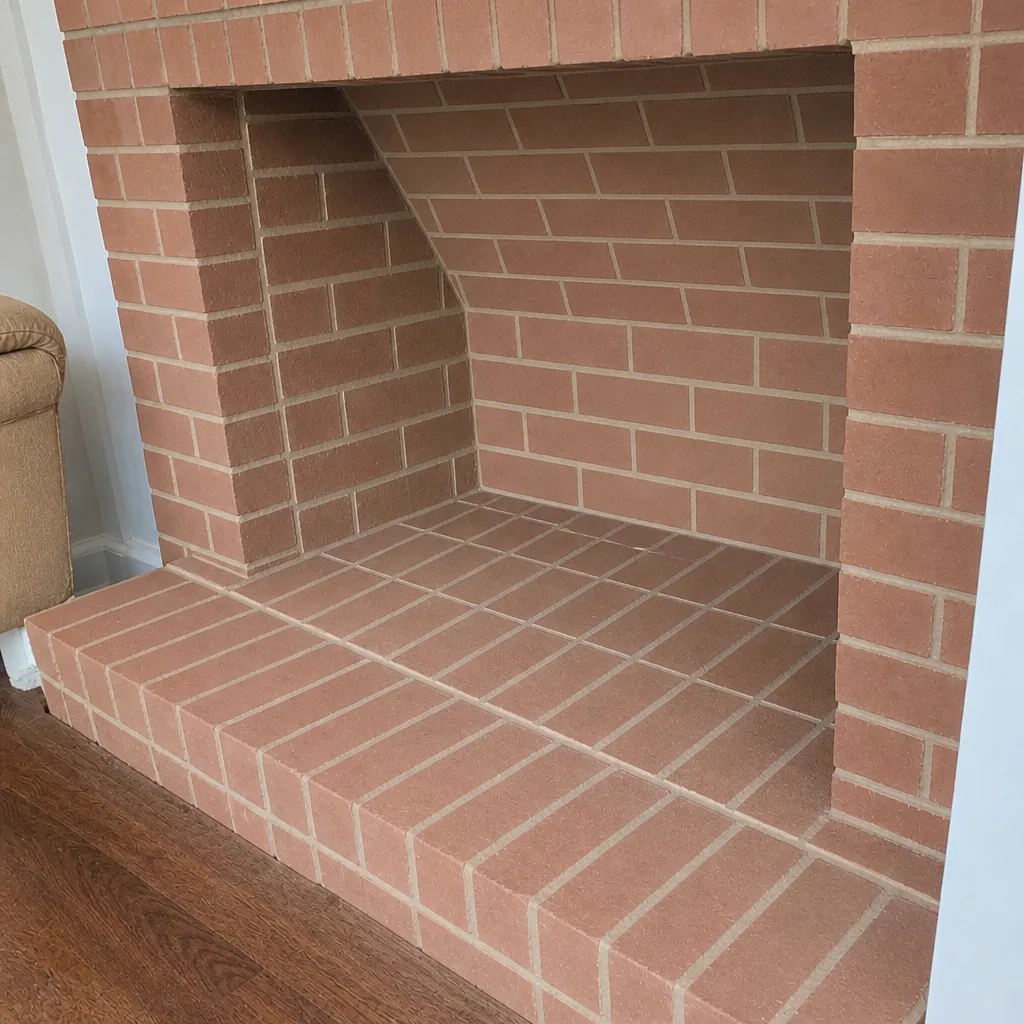 After
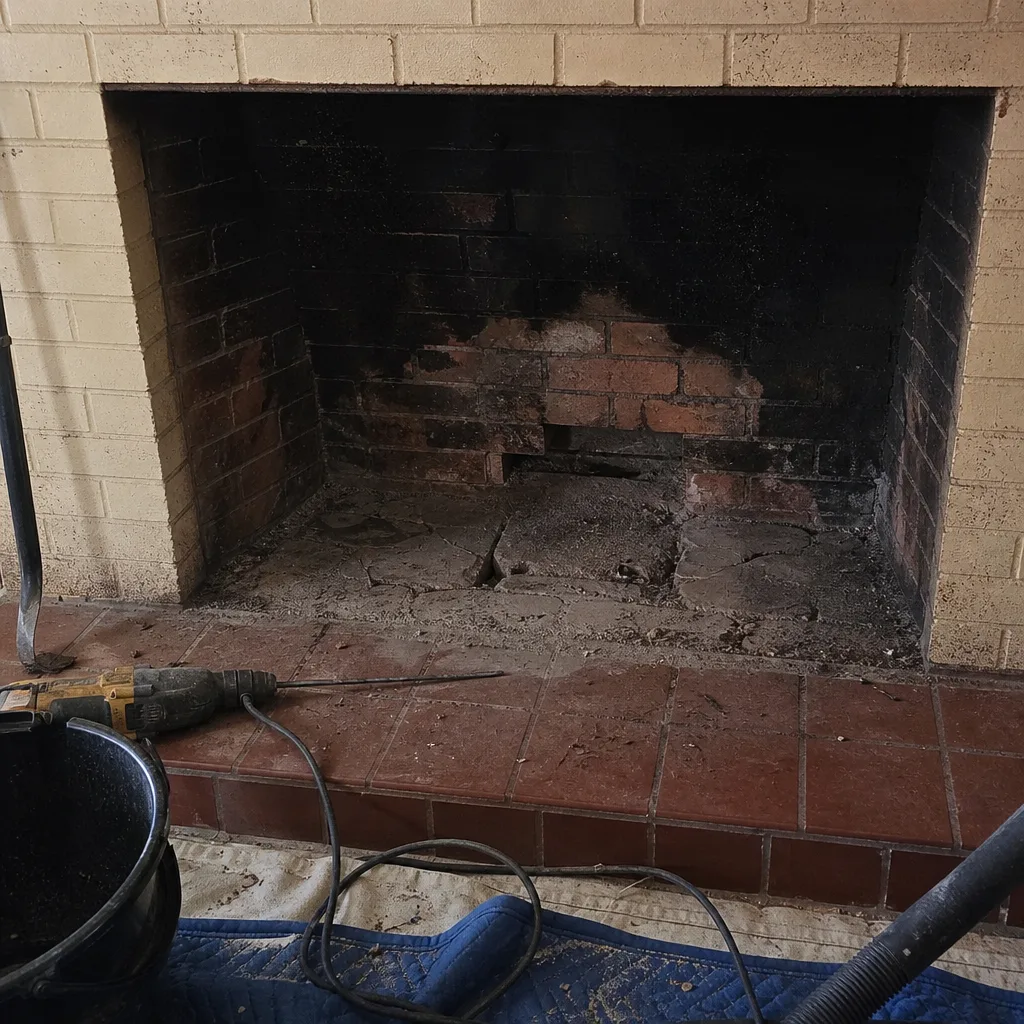 Before
 After
 Before
 After
When to Call a Professional
Call a professional when you have a sign you can’t interpret with confidence or a pattern that’s repeating. Smoke rollback that persists past the first fire, stains that appear where there were none, an odor that’s now noticeable in warm weather, or any exterior damage at the crown, cap, or flashing are all reasons to book an inspection. Call sooner, and stop using the fireplace, if you’ve seen cracked firebox masonry, loose liner pieces, or soot where it shouldn’t be. A carbon monoxide alarm is grounds for a call and a shutdown, no matter what else you’ve read here.
Chimney Sweep Tyler offers free estimates in Tyler. Call (866) 389-3453. We answer 24/7. Fast dispatch from 7am to 7pm, Sunday through Friday. We’re closed Saturday. Every estimate is set per job by the written estimate, and nothing is recommended without camera evidence you can see for yourself.
Frequently Asked Questions
A campfire smell in warm weather and soot streaks above the firebox opening are usually the first signs. Both point to creosote buildup that’s reached a level where it can be read from the living room, before smoke does anything abnormal. Others include smoke that hovers rather than rises, gritty material you can touch at the firebox, and damper hardware that has started to rust. If you aren’t sure, call (866) 389-3453 for an exact quote; estimates are free.
No. It’s creosote pulling moisture out of humid summer air, and it signals buildup worth inspecting. In East Texas, it’s a common early warning, because the humidity does the work that a fire would do in colder months. A sweep clears the buildup, but if the smell returns quickly, check for a missing cap or an unsealed firebox, because those cause the same symptom through a different cause. Call (866) 389-3453 for an exact quote; estimates are free.
If smoke rolls back only on the first fire after a cold spell and clears once the flue warms, a cold flue is a plausible answer. If it rolls back regularly, if it rolls back even after the flue warms, or if you see staining above the firebox, it’s a mechanical failure rather than a temperature issue. Photograph the pattern before it changes and call (866) 389-3453 for an exact quote. Estimates are free.
Usually yes, pending a scheduled repair, provided the firebox and flue interior look sound and there’s no soot streaking at the firebox opening. Exterior damage is a water problem first, and water damage to brick, flashing, and the crown is where interior problems start. The stop-use category is interior: cracked firebox masonry, loose liner material, or a strong chemical smell. When in doubt, book the inspection before the next fire.
Annually for a chimney in regular use, and sooner if you’ve burned heavy for a season, seen glazed creosote, or had a smoke rollback problem. The warm, humid months here make creosote reactive, so the summer smell is a good reminder that the appointment is due, not a sign that the season can wait. Call (866) 389-3453 for an exact quote; estimates are free.
A liner is only needed when a camera shows the existing one is compromised, and you should be able to see that evidence for yourself. In many cases a resurfacing with a HeatShield system can correct a failed liner without a full replacement, which is between the sweep and the reline in scope and cost. If the interior damage is too extensive for resurfacing, a full reline with a flexible DuraFlex system is the alternative. Ask to see the camera images before you agree to anything. Call (866) 389-3453 for an exact quote; estimates are free.
The Bottom Line
Chimney problems are quiet before they’re serious, and the signs that matter most in a Tyler home are the ones people read as normal: a summer smell, a stain called cosmetic, smoke that “always did that.” Each one maps to a specific cause, and the fix depends on which one you’re looking at. Shut the fireplace down for interior failures and schedule the exterior ones before the next warm season pushes water through the brick. Photograph what you see before it changes. A sweep that inspects and repairs as one team is what turns a warning sign into a solved problem. A chimney is a measurable system, not a mystery, and that’s the way we treat it.
Written by the team at Chimney Sweep Tyler.